By Ajibola Olaide, JKNewsMedia Reporter
HUNDREDS OF thousands of young lives could be saved every year through optimal breastfeeding, yet millions of children continue to face the effects of undernutrition as too few infants receive recommended feeding during the earliest months of life.
JKNewsMedia.com reports that the World Health Organization (WHO) said undernutrition is associated with 2.7 million child deaths every year, accounting for 45% of all child deaths.
The organ also said optimal breastfeeding alone could save more than 820000 children under the age of five annually.
It added that infant and young child feeding is central to improving child survival, healthy growth and development.
Describing the first two years of life as a critical period during which good nutrition lowers morbidity and mortality, WHO notes that this reduces the risk of chronic disease and supports better development.
In conjunction with the United Nations Children Education Fund (UNICEF), WHO recommends that mothers begin breastfeeding within one hour of birth, exclusively breastfeed for the first six months, then introduce nutritionally adequate and safe complementary foods at six months while continuing breastfeeding until two years of age or beyond.
Despite those recommendations, WHO revealed that only about 44% of infants aged from birth to six months worldwide were exclusively breastfed between 2015 and 2020.
It also reported that in 2022 an estimated 149 million children under five were stunted, 45 million were wasted and 37 million were overweight or obese.
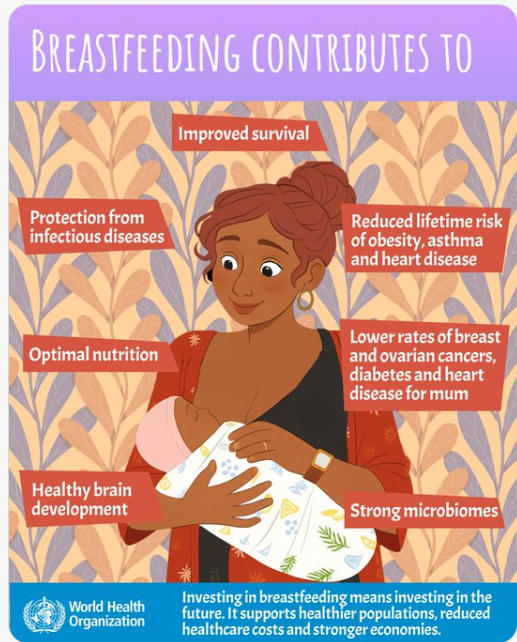
Additionally, the world health organ reiterated that exclusive breastfeeding for the first six months protects infants against gastrointestinal infections, while breastfeeding within the first hour after birth helps protect newborns from infections and reduces newborn mortality.
It said babies who are partially breastfed or not breastfed face a higher risk of death from diarrhoea and other infections.
Breast milk also provides half or more of a child’s energy needs between six and 12 months and one third between 12 and 24 months, according to WHO, stressing that breast milk remains a critical source of energy and nutrients during illness and reduces mortality among children who are malnourished.
Children and adolescents who were breastfed as babies are less likely to be overweight or obese, perform better on intelligence tests and have higher school attendance, WHO said further.
It also said breastfeeding is associated with higher income in adult life, while improved child development and lower health costs create economic gains for families and at the national level.
Similarly, longer periods of breastfeeding reduce the risk of breast and ovarian cancer in mothers and help space pregnancies through the Lactation Amenorrhoea Method, the organisation emphasised.
On complementary foods, WHO said that should be introduced at around six months because an infant’s nutritional needs then exceed what breast milk alone can provide as it further recommended continued breastfeeding on demand until two years of age or beyond, alongside appropriate child’s nutritional needs.
Moreover, WHO said breastfeeding remains the preferred feeding option in almost all difficult situations, including for premature babies, low birth weight infants, adolescent mothers, children who are malnourished, as well as for families affected by complex emergencies and mothers living with HIV in settings where diarrhoea, pneumonia and malnutrition remain prevalent.
Wrapping up on its recommendations, WHO said lifelong antiretroviral treatment for all people living with HIV, including pregnant and breastfeeding mothers, remain paramount.
It said mothers in settings where national health authorities support breastfeeding should exclusively breastfeed for six months, introduce complementary foods and continue breastfeeding until at least the child’s first birthday, affirming that it continues to support countries through its nutrition programmes and works with UNICEF to protect, promote and support breastfeeding.
—